
How to Choose Preschool Bible Story Teaching Kits

Last Updated: October 28, 2026
Quick Summary
The best bible story teaching kits for preschoolers tell one clear story with simple words and include tangible props like puppets, felt pieces, or peek boards. Look for bright visual cues and a short song or motion that repeats the main idea.
Choose a kit that tells one clear Bible story with simple words and a clear arc.
Look for physical props such as puppets, felt pieces, or peek boards that children can handle.
Pick kits with bright colors and recognizable characters to help toddlers follow along.
Make sure the kit suggests a short song or motion that repeats the main idea.
Before ordering, confirm the kit fits your age range and how many children it can serve.
Table of Contents
Preschool Bible Lesson Ideas Built on Touch, Sight, and Sound
Bible Stories for Toddlers: Matching Stories to Age and Attention Span
Church Nursery Bible Activities and Keeping Props Clean and Safe
Using Bible Story Kits at Home and Reinforcing Lessons with Parents
Choosing Your Next Kit: Pricing, Ordering Time, and Questions to Ask Palma Smiley
What a Preschool Bible Story Teaching Kit Should Include
A good preschool Bible story teaching kit does more than retell a story. Compare the options in our roundup of proven preschool Christian education resources to see what quality kits contain. It gives a teacher or parent physical objects to hold, move, and return to again and again.
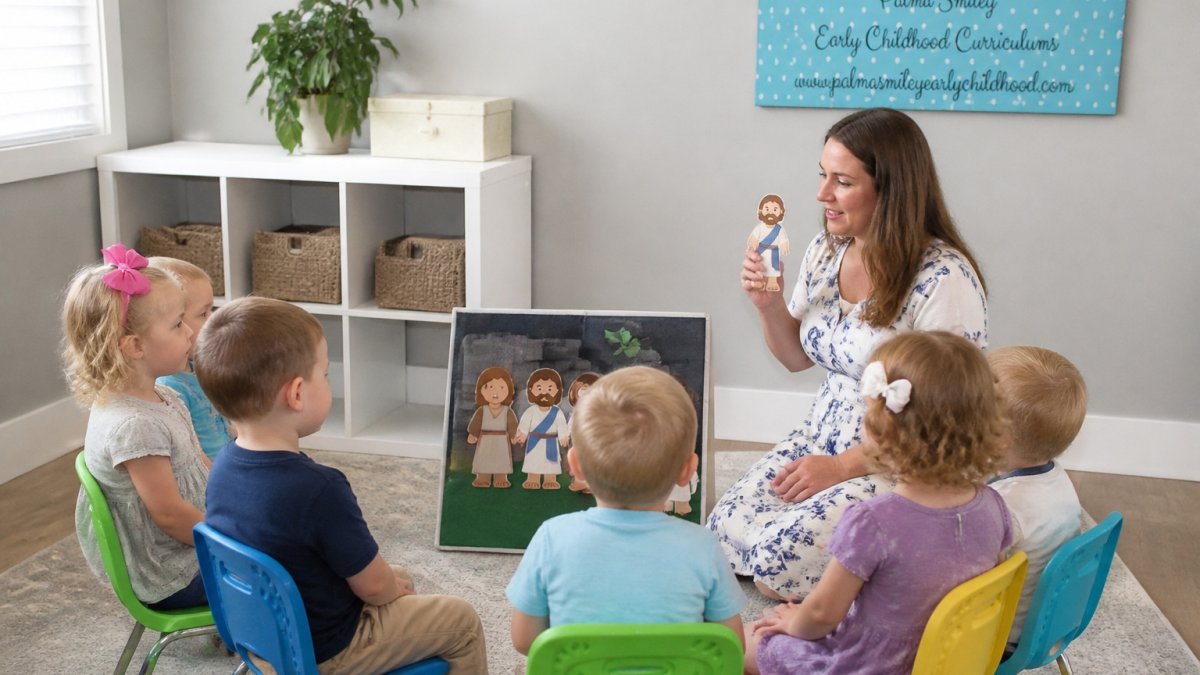
When you compare kits, look for a few core elements. Each kit should tell one clear Bible story with simple words and a clear arc. It should include tangible props such as puppets, felt pieces, or peek boards that children can handle. Visual cues like bright colors and recognizable characters help toddlers follow along. Finally, the kit should suggest a short song or motion that repeats the main idea.
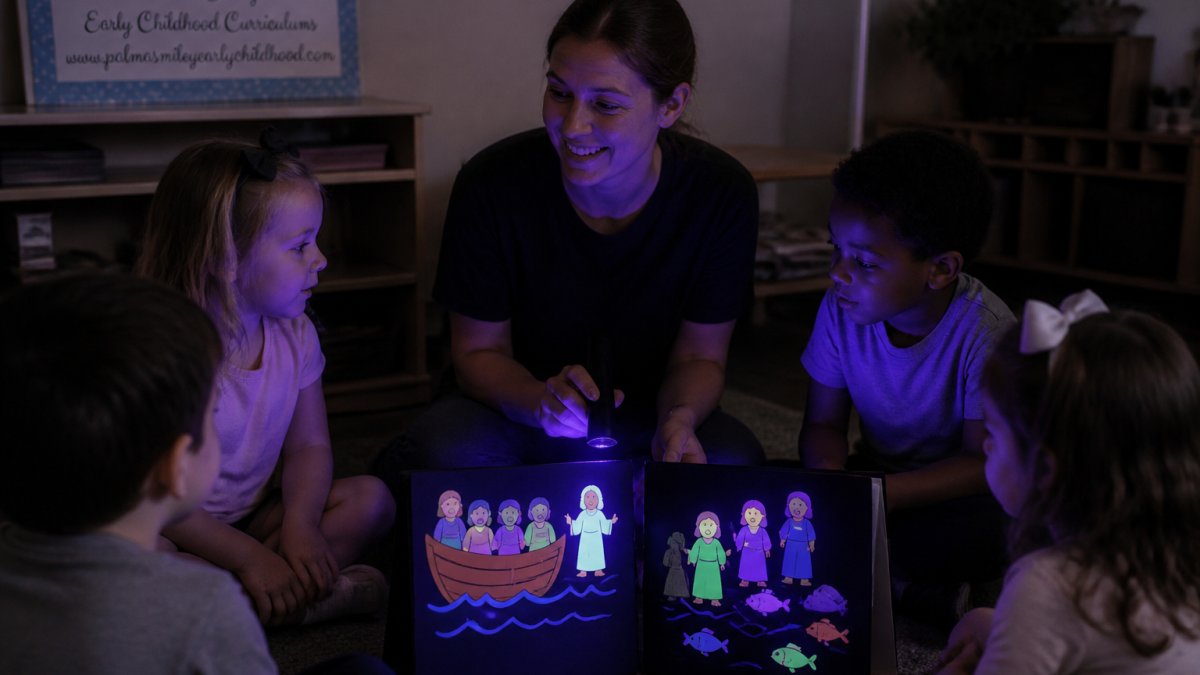
Our black light story kits, puppets, and peek boards are among the teaching aids available from Palma Smiley Early Childhood.
The article points to a few core elements a good kit should include, which are summarised below.
Element | What it provides | Why it matters |
One clear story | Simple words and a clear arc | Easy for toddlers to follow |
Tangible props | Puppets, felt pieces, or peek boards | Children can handle and move them |
Visual cues | Bright colors and recognizable characters | Helps toddlers follow along |
Short song or motion | Repeats the main idea | Reinforces the story |
Preschool Bible Lesson Ideas Built on Touch, Sight, and Sound
A lesson on Creation can start with a cotton-ball cloud held overhead, then move to an animal toy, and end with a glow star during a short song.
Here are three ways to build a lesson around the senses:
Touch: Pass a textured item, such as a felt animal or a piece of soft fabric, around the circle as you name the part of the story it represents.
Sight: Use a blacklight story kit in a dim room so the characters appear to glow as you tell the story.
Sound: Sing the same short song at the start and end of each lesson so children learn to expect it.
Bible Stories for Toddlers: Matching Stories to Age and Attention Span
Plan a short story, then move into a motion song or a prop children can hold.
Here is a practical story map by age band:
Babies and young toddlers (under 2): Creation (a cotton-ball cloud, a soft animal toy, a glow star), the Good Shepherd (a felt sheep and a shepherd puppet), and Baby Moses (a small basket prop). Keep to one image and one repeated phrase.
Toddlers (2-3): Noah's ark (animal toys and a simple ark board), Jonah and the big fish (a puppet that "swallows" a felt figure), and Jesus calming the storm (a blue scarf waved gently, then stilled). One action, one sound, one song.
Older preschoolers (4-5): The Good Samaritan, Daniel in the lions' den, and the first Christmas and Easter accounts told in two or three steps, with a chance to repeat a key line or act out a motion.
If a group is restless, shorten the story and move to a song.
Pro Tip For mixed-age nursery and Sunday school groups, tell the story to the youngest child in the room and let older preschoolers help by holding props or demonstrating motions. This keeps one lesson workable across a wide age range without splitting the class.
Toddler Bible Songs with Motions That Carry the Story
A song about Creation might use arms raised for the sky, hands waving for the water, and a stomp for the land.
Use songs with repeated motions, such as a Creation song, in your lessons.
Church Nursery Bible Activities and Keeping Props Clean and Safe
Church nurseries handle many children, which means props must be cleaned and checked often. Wipe hard toys between groups, and launder fabric items regularly. Inspect puppets and felt pieces for loose parts that could be a choking hazard for babies and toddlers. Keep small items out of reach during free play.

A nursery volunteer seated on the carpet with a small group of toddlers works well. Place a cotton-ball cloud and a felt animal puppet between the children, and let the story unfold in front of them. Keep the room warm and the lighting soft.
A simple routine can help volunteers prepare for a lesson.
Using Bible Story Kits at Home and Reinforcing Lessons with Parents
Parents can carry a lesson beyond the church nursery by repeating a story, phrase, song, or hands-on activity at home.
A sample take-home card for a Creation lesson might read:
Story: God made the sky, the water, and the animals.
Key phrase: "God made everything." Say it together with arms raised for the sky and hands waving for the water.
Song: the same short Creation song sung in class, with motions written out in one line each.
At home: hold a cotton ball overhead as a cloud, then name one animal toy and thank God for it.
Parents can repeat a story or song at home during the week.
If you are a homeschooling parent, follow the same rhythm: one story, one song, one hands-on prop, and a short review over several days. Consistency matters more than length. The same take-home card works for a family as for a church class, which keeps the message consistent between Sunday and the rest of the week.
Choosing Your Next Kit: Pricing, Ordering Time, and Questions to Ask Palma Smiley
For current prices, visit the website.
Before you order, consider these questions for any provider:
Is the kit designed for the age range I teach, such as toddlers or preschoolers?
Does it include physical props, not only printed pages?
How many children can the materials serve in a single class?
What is the expected timing for delivery, and does it fit my schedule?
Browse our Bible story kits to see the range of options, or read how to teach Bible to toddlers: a step-by-step guide for ideas you can use right away.
Frequently Asked Questions
What should a preschool Bible story teaching kit include?
Palma Smiley Early Childhood offers Bible-based curriculum and teaching aids, including black light story kits, puppets, peek boards, and story bags. The Baby Jesus Color Story Kit includes a story in song and is listed for ages 1 ½ up to 6 years. Check the website for current details about individual kits.
How do you teach Bible stories to preschoolers?
Use a hands-on approach with props, puppets, and songs with repeated motions. For a Creation theme, you might use a cotton-ball cloud, animal toys, or glow stars. Repetition and routine can be part of lessons for very young children.
How can volunteers keep Bible story props clean and safe?
In a church nursery, volunteers can include cleanliness and safety in their routines for handling teaching props, and communicate with parents about the lesson.

Comments